
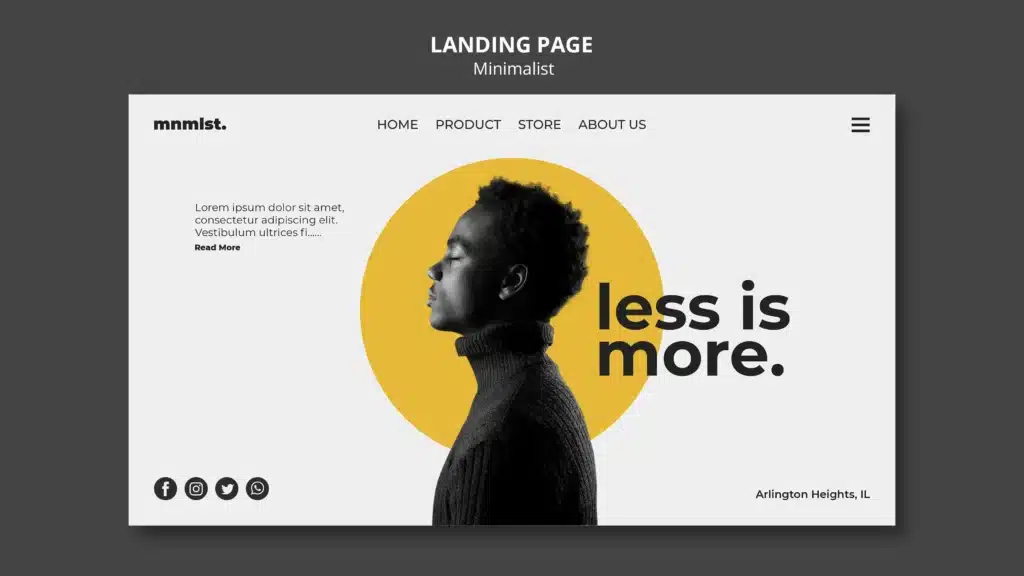
Landing page design tips are essential if you want your traffic to actually convert.
You can drive traffic to your website all day long.
Through ads.
Through social media.
Through email campaigns.
Through SEO.
But traffic alone doesn’t grow your business.
What really matters is what happens after someone lands on your page.
Do they take action?
Do they sign up?
Do they request a quote?
Do they make a purchase?
That’s where landing page design becomes extremely important.
A landing page is not just another page on your website. It’s a focused page designed with one goal — conversion. Every element on it should support that goal.
If your landing page is confusing, cluttered, or unclear, visitors will leave without converting. But when the design is clean, strategic, and user-focused, conversion rates can increase significantly.
In this guide, we’ll walk through practical landing page design tips that actually improve results — explained in simple, non-technical language.
Let’s begin.
What Makes a Landing Page Different From Other Pages?
Before we talk about design tips, it’s important to understand something:
A landing page is not the same as your homepage.
Your homepage serves multiple purposes. It introduces your brand, provides navigation, and directs visitors to different sections of your website.
A landing page, however, has one primary goal.
That goal could be:
- Generating leads
- Selling a product
- Getting sign-ups
- Promoting an event
- Encouraging downloads
Because of this, landing pages should be:
Focused.
Simple.
Clear.
Distraction-free.
There should be no unnecessary links pulling visitors away from the main action.
The entire design should guide users toward one specific decision.
Strong and Clear Headlines Make a Huge Difference
Your headline is the first thing visitors see.
If it doesn’t grab attention or clearly explain value, people won’t stay long enough to read anything else.
A high-converting headline should:
- Clearly explain the benefit
- Match the ad or traffic source
- Speak directly to the target audience
- Be easy to understand instantly
Avoid vague headlines.
Instead of saying:
“We Provide Digital Solutions”
Say something more specific:
“Grow Your Business with Results-Driven Web Design”
Clarity increases trust.
And trust increases conversions.
Keep the Design Clean and Focused
Landing pages should not feel overwhelming.
Too many colors.
Too many sections.
Too many buttons.
Too many distractions.
All of this reduces conversion potential.
One of the most important landing page design tips is to keep your layout clean and focused.
Minimal design works better because it keeps attention on the main goal.
White space is important. It gives the content room to breathe and helps users focus on key elements.
Remember: The goal is not to impress visitors with complexity.
The goal is to guide them toward action.
Use High-Quality, Relevant Visuals
Images and videos can improve engagement — but only if they support the message.
Avoid decorative visuals that don’t add value.
Instead, use:
- Product images
- Demonstration videos
- Real team photos
- Relevant illustrations
- Screenshots of results
Visuals should build trust and clarify the offer.
They should never distract from the call-to-action.
Call-to-Action (CTA) Design Is Critical
The CTA is the most important element of your landing page.
It’s the button or action you want visitors to take.
To improve conversions, your CTA should:
- Use clear action words (Get Started, Download Now, Request a Quote)
- Stand out visually from the background
- Be easy to find
- Appear above the fold (visible without scrolling)
Button color matters, but contrast matters more.
If the button blends into the background, users may not notice it.
Your CTA should feel obvious.
Build Trust with Social Proof
Use a Clear and Logical Page Flow
The structure of your landing page matters as much as the design itself.
A high-converting landing page usually follows a psychological flow:
First, it captures attention.
Then it explains the value.
Next, it builds trust.
Finally, it encourages action.
This flow feels natural to users.
It should guide visitors step by step without overwhelming them.
Avoid placing too many competing messages on one page. If users feel confused about what to do next, they won’t take action.
Clear structure leads to clear decisions.
Optimize for Mobile Users First
Most landing page traffic today comes from mobile devices.
That means your design must work perfectly on smaller screens.
One of the most important landing page design tips is prioritizing mobile-first optimization from the very beginning.
Mobile optimization includes:
Readable text without zooming.
Buttons large enough to tap easily.
Short and simple forms.
Fast loading speed.
Clean layout without clutter.
On mobile, attention spans are even shorter. If the page feels complicated, users will leave quickly.
A mobile-first approach ensures your design works beautifully across all devices, not just desktops.
Keep Forms Short and Simple
If your landing page includes a form, this part is critical.
Long forms reduce conversions.
Every extra field increases friction. So only ask for information you truly need.
Instead of requesting too many details upfront, keep it simple. For example, name, email, and one optional field may be enough.
Clear labels, proper spacing, and visible form placement also improve completion rates.
The easier the form feels, the more likely users will submit it.
Speed Is Still Important
Landing page design should always consider performance.
Even if the page looks amazing, slow loading can reduce conversions dramatically.
Visitors expect pages to load quickly. If it takes too long, they may leave before seeing your offer.
To improve speed:
Optimize images.
Avoid unnecessary animations.
Limit heavy scripts.
Use reliable hosting.
Test performance regularly.
A fast landing page creates a smoother experience — and smoother experiences convert better.
Remove Distractions Completely
One major difference between a website page and a landing page is focus.
Landing pages should remove distractions.
That means:
No unnecessary navigation links.
No unrelated content.
No competing offers.
The visitor should have one clear path.
When users have too many choices, they delay decisions. This is known as decision paralysis.
By limiting distractions, you make it easier for visitors to take the intended action.
Use Visual Hierarchy to Guide Attention
Visual hierarchy simply means organizing elements so the most important information stands out.
Your headline should be the most prominent element.
Your CTA should be clearly visible.
Supporting information should come after.
You can use size, spacing, color contrast, and placement to guide the viewer’s eye naturally.
Good visual hierarchy helps users understand your message without effort.
And when things feel easy, conversions increase.
Test and Improve Continuously
Landing page design is not a one-time task.
Even small changes can significantly affect performance.
Testing different versions of:
Headlines.
CTA text.
Button colors.
Images.
Layout variations.
Can reveal what works best for your audience.
This process is called A/B testing.
Data-driven improvements often outperform assumptions.
The more you test, the better your conversion rates become over time.
Final Thoughts
A high-converting landing page is not about flashy design.
It’s about clarity.
It’s about focus.
It’s about guiding visitors toward one specific action without confusion.
When your design is clean, your message is clear, your trust signals are strong, and your page loads quickly, conversions naturally improve.
Remember:
Traffic is only valuable if it converts.
Good landing page design turns visitors into customers. And that’s what ultimately grows your business.
Ready to Improve Your Landing Page Conversions?
If your landing page is not generating the results you expect, the design may need strategic improvements. Small changes in layout, messaging, trust elements, and call-to-action placement can significantly increase conversion rates.
At ePrint, we create high-converting landing pages designed with performance in mind — not just aesthetics. Our focus is on clarity, user experience, and measurable results.
Contact us today for a free landing page review and discover how we can help you turn more visitors into customers.